7 Steps to Get So Good at Valorant It Feels Like Smurfing
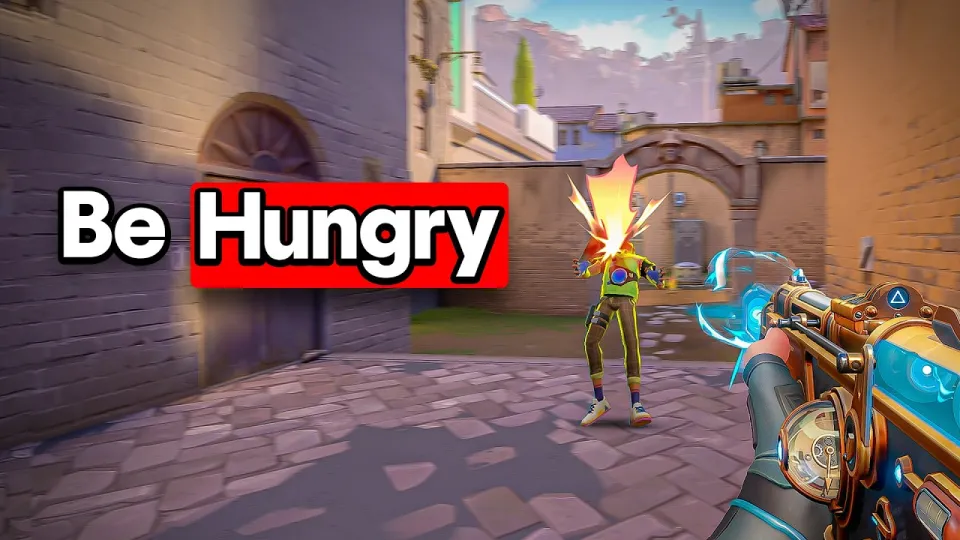
Video: How to Get So Good at Valorant it Feels Like Smurfing
You can order the same kind of articles for your own video to boost it on YouTube and Google. Just message the Telegram bot @sat_sit_bot. Articles with your video embedded are written and posted by the bot itself — on popular topical sites (no ads). Try it free: 50 articles on us.
· based on the channel Konpeki
Getting so good at Valorant that it feels like smurfing comes down to one repeatable loop: build a small set of fundamentals until they are automatic, then use them to react to the enemy instead of running a fixed script. The fastest shortcut is structured feedback — Konpeki's Immortal Roadmap Program (apply here for a free call and a shot at 5 divisions in 10 weeks) exists exactly for that, but the seven steps below work on their own if you put in the reps. Smurfing, in other words, is not a secret technique; it is what your gameplay looks like once the basics stop costing you attention.
Why smurfing is a fundamentals problem, not a talent problem
A smurf does not win because of a hidden setting or a lucky account — they win because every basic action costs them less thought than it costs you. When crosshair placement, strafing and reaction timing are automatic, all of your mental bandwidth goes to reading the enemy, and that is the moment the game starts to feel slow. Konpeki's breakdown, published on 4 September 2026, is built around this idea: the mechanics are the entry ticket, and the actual edge comes from reacting instead of predicting.
This is also why smurfs look so consistent across different maps and agents. They are not out-aiming everyone in every fight; they are taking fewer bad fights and converting more of the good ones. If you want the same feeling, stop looking for a trick and start auditing the seven layers below in order — each one makes the next one easier to learn.
Step 1 — Fix crosshair placement before anything else
Crosshair placement is the single highest-return habit in Valorant because it removes the need to aim. Keep the crosshair at head level at all times, and let the map do the work: as you move through a corridor, your aim should already be on the angle an enemy would swing from. Pre-aim the common off-angles, not the middle of the wall.
A practical drill: load a custom game on any map, walk a full route, and never let the crosshair drop below head height. Then repeat the same route in a Deathmatch and check whether the habit survives contact. Most players lose 60–70% of their placement discipline the moment a fight starts, and that gap alone explains a large part of the rank difference between a Gold player and a Diamond one.
Step 2 — Learn movement as a weapon, not a taxi
Movement in Valorant is a combat tool: you peek, you stop, you shoot, and you move again. The counter-strafe matters more than raw speed — tapping the opposite key to kill your momentum instantly is what makes your first bullet accurate. If you fire while still sliding, the game punishes you with spread, and no amount of aim training fixes that.
One viewer suggested turning the movement error setting on and lowering its multiplier to around 0.5, which makes the feedback visible without being overwhelming — a reasonable way to train your eye. Another common question is whether you should fully stop between side-to-side shots in the Range or keep strafing non-stop. The honest answer is that both have a place: the stop-and-shoot version builds the habit of accurate first bullets, while the continuous A-D-A version trains you to fire the instant your direction switches. Do the first until it is boring, then the second until it is fast.
Step 3 — Train reactions, not predictions
A huge share of low-rank deaths come from guessing. You pre-fire an angle because you "know" someone is there, you commit to a duel because you already decided to take it, and you die to information you never actually had. High-level players do the opposite: they hold a position, wait for a real cue — a sound, a utility line, a teammate's contact — and then react.
Reaction speed is trainable. Simple drills work: in the Range, use the bots on hard mode and only shoot after they appear, never pre-aiming a spot you expect them at. In Deathmatch, force yourself to take only fights you did not initiate. The goal is to make "wait for the cue, then move" your default state, because that is exactly the behaviour that makes a player look like a smurf to everyone else in the lobby.
Step 4 — Become unpredictable on purpose
Predictability is the most common giveaway that someone is not actually smurfing. If you take the same angle every round, rotate the same way, and buy the same utility at the same timing, a decent opponent reads you by round three. Unpredictability does not mean playing randomly — it means varying your timing, your position, and your aggression while keeping the same underlying plan.
A simple framework: for every map you play, keep three opening options and rotate between them. Sometimes you push early, sometimes you hold, sometimes you play a support angle for a teammate. Add small timing changes — five seconds earlier or later than usual is often enough to catch a pre-aiming opponent off guard. Konpeki's central message, as viewers summed it up, is precisely this: react to the enemy and stay unpredictable.
Step 5 — Build a plan before the round starts
A player who feels like a smurf usually knows what they are doing in the first ten seconds of a round before the round even begins. That comes from a plan, not from talent. Before the buy phase ends, decide your role in the round: are you the entry, the trade, the anchor, or the lurker? What is your first piece of utility for, and what is the fallback if the enemy hits the other site?
One viewer compared it to a sport — you do not improvise a football match or a jiu-jitsu bout, you execute a plan and adapt when the opponent forces you to. Valorant works the same way. A written plan for the first two rounds of each half, reviewed after the game, will improve your decision-making faster than another hour of aim training.
Step 6 — Review your own games like a coach
Improvement without review is just repetition. Record your games and watch them with one question per session: where did I die without information, and where did I die with information but bad mechanics? Those two categories cover most mistakes, and they need different fixes. Bad information deaths are a game-sense problem; bad mechanics deaths are a practice problem.
Keep the review short — 10 to 15 minutes, three rounds maximum, one lesson written down. Players who review consistently climb noticeably faster than players who only grind more matches, because they stop repeating the same error. If you want external eyes on your footage, the free coaching resources and office hours in the Konpeki Discord (https://www.discord.gg/UnRETVmRpV) are built for exactly that kind of feedback.
Step 7 — Make consistency the actual goal
Smurf-level play is not about one highlight round; it is about the floor of your performance. A player who never drops below a solid baseline will out-climb a player who alternates between 30-kill games and 8-kill games, because ranked rewards consistency across hundreds of rounds. Set a minimum standard for yourself — crosshair placement, one useful utility per round, no solo deaths without information — and protect it even in games you are losing.
That baseline is also what makes the game feel easy. When your worst rounds are still functional, the pressure drops, your decisions get cleaner, and opponents start calling you a smurf. This is the point where structured coaching pays off most: a program with a fixed curriculum and a guaranteed outcome removes the guesswork about what to practise next.
Common questions players ask about ranking up
The most frequent doubts are practical rather than theoretical. Players ask whether they are too low-ranked for coaching to help (it helps most at low ranks, because the errors are bigger and easier to fix), whether the platform matters (console players on PS5 or Xbox face the same fundamentals, just with controller-specific aim and movement drills), and whether there is an age requirement for structured programs (usually there is a minimum age for accounts and payments, so check before applying).
Another recurring theme is the teammate problem — games where a bot-like teammate throws the round before you can influence it. The answer is not to fix them, it is to reduce the number of rounds that depend on them: play for trades, avoid unnecessary 1v2 duels, and protect your own economy so you can carry the rounds you do control. You cannot coach your solo-queue teammates, but you can make their mistakes cheaper for you.
Useful links
- Immortal Roadmap Program — 5 divisions in 10 weeks, free call to check fit: https://roadmap.gg/v/lUfrMRb74SE
- Konpeki Discord — free coaching resources and office hours: https://www.discord.gg/UnRETVmRpV
- Twitch: https://www.twitch.tv/konpekichan
- Twitter: https://twitter.com/coachpeki
- TikTok: https://www.tiktok.com/@coachpeki
The takeaway
The route to feeling like a smurf in Valorant is unglamorous: fix crosshair placement, train movement and reactions, stay unpredictable, plan each round, review your own footage, and hold a consistent baseline. None of these seven steps requires talent — they require repetition and honest feedback. Konpeki's breakdown is a useful map for that process, and the Immortal Roadmap Program at https://roadmap.gg/v/lUfrMRb74SE is the structured version if you want a coach checking your reps instead of guessing alone. Do the boring work first, and the highlight rounds follow on their own.
Key takeaways
- Smurfing is not a cheat code — it is the visible result of better fundamentals, not better luck.
- Konpeki's guide "How to Get So Good at Valorant it Feels Like Smurfing" was published on 4 September 2026.
- The core idea viewers took away: react to the enemy and stay unpredictable.
- The Immortal Roadmap Program promises 5 divisions in 10 weeks, with a free call before you join.
- Free coaching resources and office hours run through the Konpeki Discord server.
Questions & answers
How long does it take to get good enough to feel like a smurf in Valorant?
Most players see a visible jump in two to four weeks of focused practice, not from grinding more matches. The key is fixing one layer at a time — crosshair placement first, then movement, then reactions — and reviewing games so you stop repeating the same mistakes. Structured programs compress this further by promising measurable rank gains over a fixed period, such as 5 divisions in 10 weeks.
Do I need high rank before coaching or a program can help me?
No — low and mid ranks benefit the most, because the errors are larger and easier to correct. A coach can spot placement, movement and decision habits in a few rounds that would take you months to notice alone. Higher ranks mostly need refinement, while beginners need fundamentals rebuilt from scratch.
Does this advice work for console players on PS5 or Xbox?
Yes, the fundamentals are identical, but the execution differs. Controller players should train aim assist behaviour, stick sensitivity and strafe timing instead of mouse counter-strafing. The reaction and unpredictability principles apply unchanged, and console-specific drills exist for both.
What should I do when my teammates make the round unwinnable?
You cannot fix random teammates, but you can reduce how much they cost you. Play for trades, avoid unnecessary duels, protect your economy, and focus on the rounds you can influence. Over a full session, consistent personal performance climbs faster than trying to carry every single round.
Source: How to Get So Good at Valorant it Feels Like Smurfing · Markdown version